
Mobile Charging Cable – Fast Charging & Durable USB Cable (2026)
In today’s fast-moving digital world, a mobile charging cable is no longer a simple accessory—it’s an essential daily companion. From morning alarms to late-night scrolling, our smartphones are constantly in use, which means charging cables play a crucial role in keeping us connected. A slow, fragile, or low-quality cable can damage your phone’s battery, waste time, and cause unnecessary frustration.
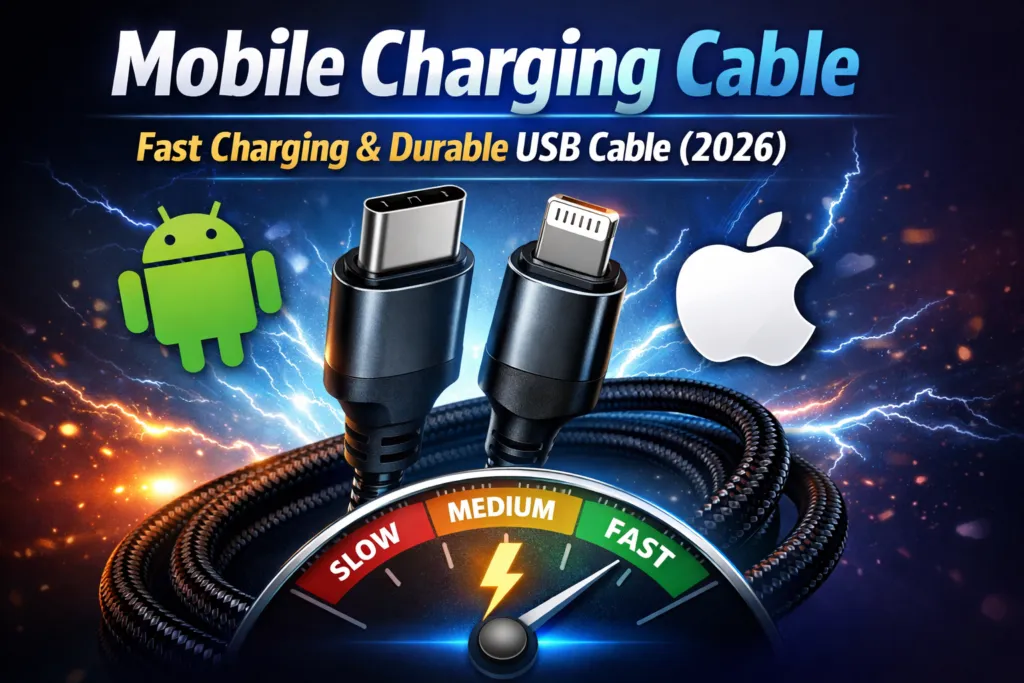
In this 2026 complete guide, we’ll explore everything you need to know about fast charging and durable USB cables. This article is written in a human, natural, and easy-to-read tone, making it perfect for direct publishing on WordPress or Blogger. Whether you are a casual smartphone user or a tech enthusiast, this guide will help you choose the best mobile charging cable for long-term use.
What Is a Mobile Charging Cable?
A mobile charging cable is a connector used to transfer power (and often data) between a power source and your smartphone. Modern cables support fast charging, data transfer, and even high-wattage power delivery for tablets and laptops.
Common Types of Charging Cables
- USB-A to Micro USB – Older Android devices
- USB-A to USB-C – Mid-range Android phones
- USB-C to USB-C – Fast charging & modern devices
- USB-A to Lightning – iPhones (older models)
- USB-C to Lightning – Fast charging for iPhones
Choosing the right cable depends on your phone model, charger type, and charging speed requirements.
Why a Good Charging Cable Matters
Many users focus on buying expensive smartphones but ignore the importance of a high-quality charging cable. This is a big mistake.
Key Reasons
- Fast Charging Performance – Poor cables limit charging speed
- Battery Health – Low-quality cables can damage batteries
- Safety – Certified cables prevent overheating and short circuits
- Durability – Cheap cables break easily at joints
A reliable mobile charging cable ensures safe, stable, and fast power delivery every time.
Fast Charging Explained (Simple Words)
Fast charging allows your phone battery to reach 50–70% in a short time. But fast charging doesn’t work with every cable.
What You Need for Fast Charging
- A fast-charging supported phone
- A fast charger adapter
- A fast charging cable (high watt support)
Popular Fast Charging Standards
- USB Power Delivery (PD)
- Qualcomm Quick Charge (QC)
- PPS (Programmable Power Supply)
A cable that doesn’t support these standards will slow down charging—even if your charger and phone are capable.
Features of a Durable Mobile Charging Cable
Durability is just as important as speed. A good cable should last for years, not months.
- Strong Outer Material
- Nylon braided cables last longer
- TPE or PVC cables are flexible but weaker
- Reinforced Connectors
Look for cables with extra protection at the joint, where most cables break.
- Thick Copper Wires
Thicker wires improve charging speed and reduce heat.
- Tested Bend Life
High-quality cables survive 10,000+ bends, ideal for daily use.
USB-C vs Lightning vs Micro USB
USB-C
- Fastest charging
- Reversible design
- Used in most Android phones
Lightning
- Exclusive to Apple devices
- Supports fast charging with USB-C adapter
Micro USB
- Old technology
- Slow charging
- Not recommended in 2026
For future-proofing, USB-C cables are the best choice.
How to Choose the Best Mobile Charging Cable (Step-by-Step)
Step 1: Check Your Phone Port
- Android (new): USB-C
- iPhone: Lightning or USB-C (latest models)
Step 2: Check Charging Speed Support
- 18W, 30W, 60W, or 100W
Step 3: Cable Length Matters
- 1 meter – Travel
- 1.5–2 meters – Home & office
Step 4: Certification
- MFi Certified (for iPhone)
- USB-IF Certified (for USB-C)
Step 5: Build Quality
Always prefer braided or reinforced cables.
Common Charging Cable Problems & Solutions
Cable Not Charging Fast
- Use original adapter
- Replace old or damaged cable
Cable Heating Issue
- Stop charging immediately
- Avoid using phone while charging
Loose Connection
- Clean phone charging port
- Replace worn-out cable
Tips to Make Your Charging Cable Last Longer
- Avoid bending near connectors
- Don’t use phone heavily while charging
- Unplug by holding the connector, not the wire
- Store cable properly during travel
- Use original or certified chargers
These simple habits can double the life of your charging cable.
Are Expensive Charging Cables Worth It?
Not always. Price doesn’t always equal quality.
Good Cables Offer:
- Certification
- Fast charging support
- Heat protection
- Long warranty
You can find excellent mobile charging cables at affordable prices if you check specifications carefully.
Best Use Cases for Mobile Charging Cables
- Home Charging – Long cable, durable build
- Office Use – Fast charging & neat design
- Car Charging – Short cable, strong grip
- Travel – Braided, tangle-free cable
Future of Mobile Charging Cables (2026 & Beyond)
Wireless charging is growing, but wired charging is still faster, safer, and more efficient. USB-C cables with 100W fast charging will dominate the future, supporting phones, tablets, and laptops with a single cable.
FAQs – People Also Ask
Is fast charging cable safe?
Yes, if it is certified and used with a compatible charger.
Can a cable damage my phone battery?
Low-quality cables can cause overheating and battery damage.
Which cable is best for fast charging?
USB-C to USB-C cables with Power Delivery support.
A mobile charging cable may look simple, but it plays a powerful role in your smartphone’s performance, safety, and battery life. In 2026, choosing a fast charging and durable USB cable is essential for every user.
By following the step-by-step tips shared in this guide, you can easily select a cable that charges faster, lasts longer, and keeps your device safe. Always invest in quality, certification, and durability—your phone
If you found this guide helpful, bookmark it and share it with friends who struggle with broken or slow charging cables.